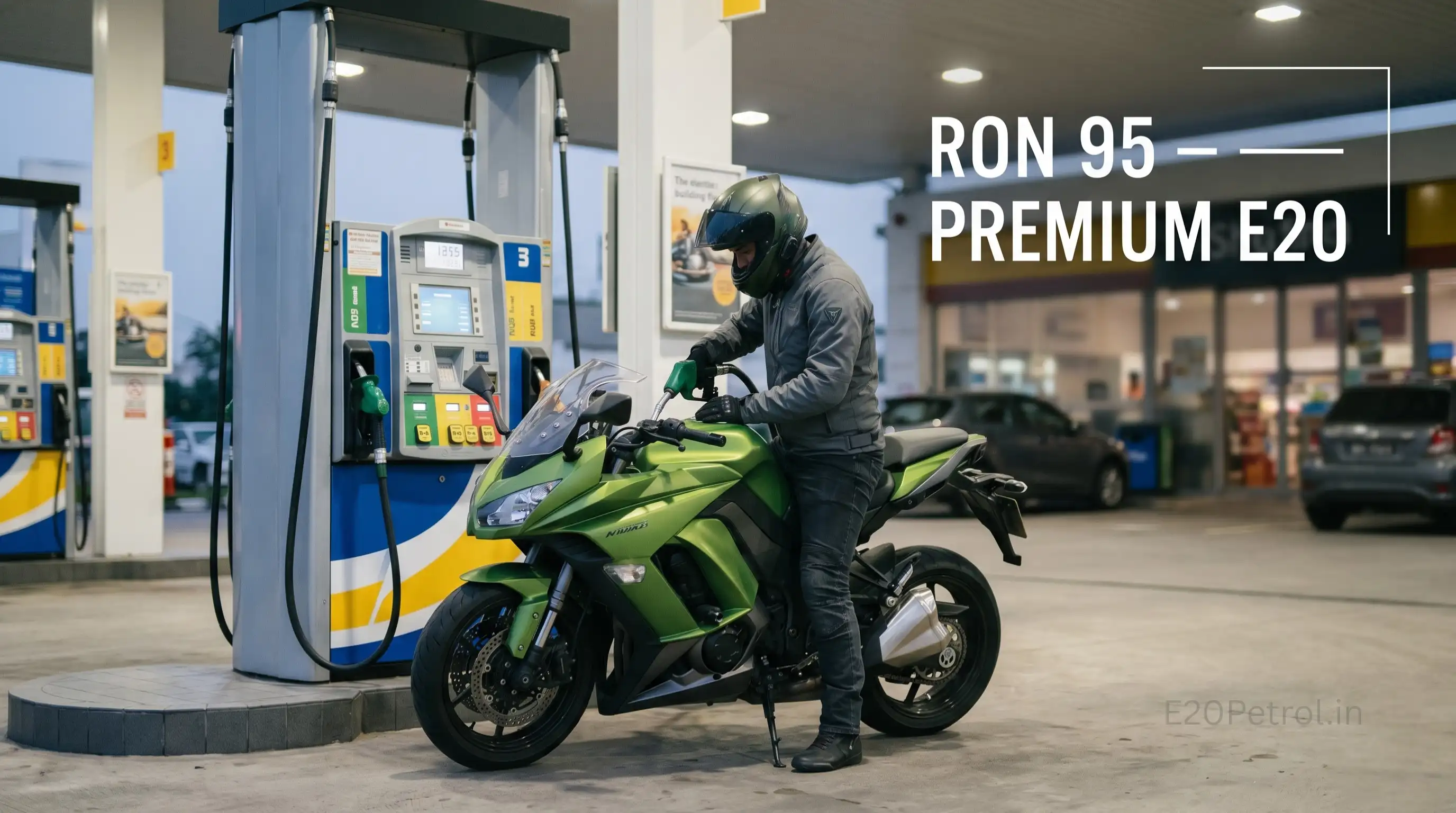
In April 2026, India completed its nationwide rollout of E20 petrol as the default fuel at every retail outlet. The mandate also set RON 95 as the minimum octane rating for all E20 blends, replacing the older RON 91 standard that governed regular petrol for decades.
What Changed in April 2026
Every petrol pump in India now dispenses E20 as the base fuel. The government phased out RON 91 regular petrol entirely, making RON 95 E20 the new entry-level grade. Premium fuels like XP95 and XP99 remain available at select outlets, but they also contain ethanol blends in most cases.
The mandate applies to all oil marketing companies, including Indian Oil, Bharat Petroleum, and Hindustan Petroleum. Private retailers like Nayara and Shell follow the same specification. No pump can legally sell petrol below RON 95 or below 20 percent ethanol content.
The transition began in select cities in 2023 and expanded in phases. By April 2026, the rollout covered every district, including remote areas and smaller towns. The Ministry of Petroleum and Natural Gas confirmed full compliance across all 80,000-plus retail outlets.
Why RON 95 Became the New Standard
Ethanol lowers the effective octane rating of petrol when blended at higher percentages. A RON 91 base fuel mixed with 20 percent ethanol would drop below acceptable performance thresholds for modern engines. RON 95 ensures the final blend delivers adequate knock resistance and combustion stability.
The Bureau of Indian Standards revised IS 2796 to mandate RON 95 for all E20 fuels. This aligns India with global markets where mid-grade petrol starts at RON 95. Countries like Brazil and Thailand adopted similar standards when they increased ethanol content beyond 15 percent.
Higher octane also reduces engine knock in high-compression BS6 engines. Most vehicles manufactured after 2020 were designed with RON 95 E20 in mind. The upgrade protects engines from pre-ignition and allows manufacturers to tune for better efficiency without compromising reliability.
How This Affects Your Vehicle
BS6 vehicles run on RON 95 E20 without modification. These engines were calibrated for the new fuel from the factory. You will not notice a difference in performance, and the ECU adjusts fuel delivery automatically to match the ethanol content.
Older BS4 and BS3 vehicles also handle RON 95 E20, though some carbureted two-wheelers may need jet adjustments if they experience lean running. The higher octane does not harm older engines. In fact, it reduces knock and allows for smoother combustion compared to the old RON 91 fuel.
Fuel economy may vary slightly depending on your vehicle’s age and tune. Ethanol contains less energy per litre than pure petrol, so a minor drop in mileage is normal. Most riders and drivers report a 3 to 5 percent reduction, which is offset by lower pump prices in many regions.
What Happened to XP91 and Regular Petrol
RON 91 regular petrol no longer exists at Indian pumps. The government withdrew it as part of the E20 mandate. If your vehicle’s manual specifies RON 91, you now use RON 95 E20 instead. The higher octane rating is safe and often beneficial for engines designed around the older standard.
XP95 premium petrol remains available, but it is not ethanol-free. Most oil companies blend XP95 with 10 to 20 percent ethanol, depending on regional supply. Only a handful of outlets in metro cities stock true zero-ethanol premium fuels, and these are labelled explicitly as E0.
If you need ethanol-free petrol for a vintage vehicle or specific application, check with your local premium outlet. Availability is limited, and prices are significantly higher than standard RON 95 E20. For daily use, RON 95 E20 is the practical choice for nearly all vehicles on Indian roads.