Is Your BS4 Car Covered Under Warranty for E20 Fuel Damage?
-
 Ajit Khandekar
 - 07 Jul, 2026
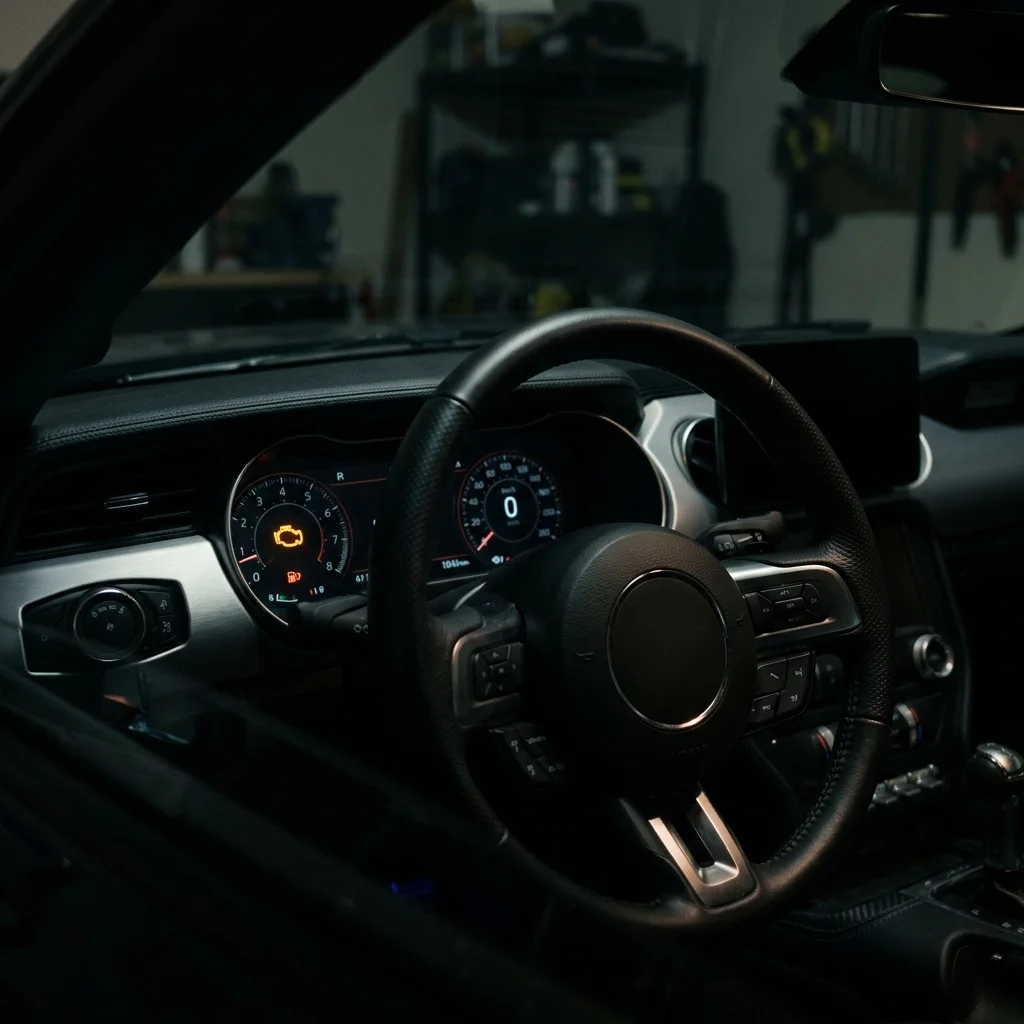
Since 1 April 2026, every petrol pump in India dispenses E20 as the only standard fuel grade available. There is no E10 option. There is no low-ethanol protection grade. And if you drive a BS4 car manufactured between 2017 and 2020, your owner manual still recommends a fuel that no longer exists, and explicitly warns against using the fuel that now comes out of every pump.
The question of who bears the cost when this mismatch causes mechanical damage is not hypothetical. It is being tested in courts, in insurance claim rejections, in RTI filings, and in quiet conversations between service centres and car owners who are finding rust in fuel pumps, swollen seals, and degraded rubber hoses.
This article documents what has actually happened (the Supreme Court ruling, the classified ARAI study, the insurance controversy, and the specific OEM warranty positions) so you know exactly where you stand.
Table of Contents
- The Core Problem - Mandatory E20 in E10-Spec Cars
- The Supreme Court Ruling - Akshay Malhotra vs Union of India
- The ARAI Study That Was Classified
- What OEM Warranty Terms Actually Say
- The Insurance Controversy - ICICI Lombard and What Followed
- What You Can Do - Practical and Legal Options
- Sources
The Core Problem - Mandatory E20 in E10-Spec Cars
Approximately 80% of the active vehicle population on Indian roads was manufactured before the April 2023 E20 material-compliance mandate. This figure, cited in technical analyses of the transition, means the majority of cars currently being driven were engineered, tested, homologated, and sold with owner manuals that specify a maximum ethanol concentration of 10%.
The chemistry of the problem is well-documented. Ethanol at 20% concentration is a polar solvent that degrades non-compatible elastomers. Standard low-grade nitrile rubber (NBR) and polyvinyl chloride (PVC) blends used in fuel hoses, gaskets, and seals in BS4 cars absorb ethanol, swell, soften, and eventually crack or leak. Ethanol is also hygroscopic, it absorbs atmospheric moisture. In a steel fuel tank, this moisture triggers internal corrosion. In the fuel delivery system, water-ethanol accumulation causes phase separation, a condition where the ethanol-water layer separates from the hydrocarbon fuel and sinks to the tank bottom, carrying essentially zero calorific value and high corrosive potential. An ARAI journal article published in 2021 specifically documented the impact of E20 on metals and non-metals used in fuel system components.
The fuel efficiency impact is separately documented. The NITI Aayog Ethanol Roadmap of 2021 projected a 6% to 7% drop in fuel efficiency for four-wheelers on higher ethanol blends. Because legacy fuel injection systems cannot dynamically recalibrate their air-fuel ratios to account for ethanol’s oxygen content, these engines run lean. Lean running increases combustion temperatures, accelerates valve seat wear, and in extreme cases can cause thermomechanical failure of exhaust valves under extended operating cycles.
The Supreme Court Ruling - Akshay Malhotra vs Union of India
The consumer rights challenge to E20 reached the Supreme Court of India as a Public Interest Litigation filed by advocate Akshay Malhotra. The case, formally titled Akshay Malhotra vs Union of India and Anr., was a Writ Petition heard by a bench of Chief Justice of India B.R. Gavai and Justice K. Vinod Chandran. The petition was dismissed on 1 September 2025.
The petitioner, represented by Senior Advocate Shadan Farasat, made two core constitutional arguments. The first was that forcing vehicle owners to use a fuel composition that their owner manuals explicitly warned against violated the right to protect private property under Article 300A of the Constitution. The second was that removing the E0 alternative without notice violated the right to informed consumer choice under the Consumer Protection Act, 2019. The petition sought three specific remedies: a court direction to ensure parallel availability of E0 petrol at retail outlets, mandatory ethanol percentage labelling on dispensing units, and an independent time-bound study on mechanical degradation of legacy vehicles.
The Union government, represented by Attorney General R. Venkataramani, argued that the E20 transition was a carefully considered policy decision supported by extensive research and expert input. The Attorney General’s stated position that “consumers cannot dictate petrol composition” was widely reported. The court agreed with the government’s framing, observing that the policy was backed by expert advice rather than arbitrary executive action, and dismissed the petition.
The legal consequence is clear: the judiciary has established that macroeconomic and environmental objectives of the ethanol blending programme take precedence over individual vehicle owners’ property concerns. There is no constitutional route to demand E0 fuel availability through the courts, at least not on the grounds argued in this petition.
The ARAI Study That Was Classified
Multiple RTI applications filed with ARAI, MoPNG, the Petroleum Planning and Analysis Cell, IOCL, BPCL, and HPCL sought copies of the engine-wear, material-compatibility, and technical feasibility studies that the government cited in defending E20. Every application was refused.
ARAI’s Central Public Information Officer formally replied: “Due to the confidential nature of data, ARAI cannot share copies of reports or documents relating to the testing. Kindly be informed that furnishing of the said information is exempted from disclosure under the provisions of Section 8(1)(d) of the RTI Act.” Section 8(1)(d) protects commercial confidence, trade secrets, or intellectual property where disclosure would harm the competitive position of a third party.
MoPNG deflected the inquiry to OMCs. BPCL stated the joint OMC-OEM durability study was strictly confidential and suggested the applicant approach MoPNG directly. The administrative circle was complete.
In July 2026, India Today obtained and reported parts of an unpublished ARAI study dated prior to the E20 rollout. The report, according to the India Today investigation published on 7 July 2026, found that pre-2023 engine components including NBR-PVC fuel lines and Epichlorohydrin seals experience significant swelling, hardening, and accelerated physical degradation under continuous E20 exposure. Road Transport Minister Nitin Gadkari dismissed E20 damage claims publicly on 8 July 2026, calling them overstated, the same day India Today reported the existence of the suppressed ARAI findings.
The pattern is administratively significant. A government agency conducted a study on material compatibility, declined to publish it, and refused to release it under RTI. The government simultaneously mandated the fuel the study was evaluating.
What OEM Warranty Terms Actually Say
The gap between public reassurances and the fine print of warranty documents is the most practically important dimension of this issue for car owners.
Honda Cars India is the most favourable. The company confirmed E20 material compatibility for all models manufactured after 1 January 2009 and stated that standard warranty terms remain fully applicable. For Honda owners, the warranty position is clear.
Maruti Suzuki’s public position (that it will honour warranties and has seen no evidence of E20-related wear across 2.84 crore serviced vehicles) conflicts with the specific text of its warranty document. Section 4(b) of the Maruti Suzuki standard warranty explicitly excludes from coverage “the normal wear of parts including without limitation… spark plugs, belts, hoses, filters, wiper blades, brushes, contact points, fuses, clutch disc, brake shoes, brake pads, cable and all rubber parts.” Fuel hoses, O-rings, fuel pump seals, and injector seals are all rubber or elastomeric parts. Any degradation attributed to E20 in these components would fall under this exclusion regardless of the company’s public statements.
Hyundai’s position is recorded in physical owner manual text. The Hyundai Venue manual (June 2019 to June 2022) states: “Do not use gasohol containing more than 10% ethanol… Vehicle damage or driveability problems may not be covered by the manufacturer’s warranty if they result from the use of gasohol containing more than 10% ethanol.” This is a written warranty limitation, not a grey area. Hyundai updated its manuals for models manufactured after October 2023 to reflect E20 compatibility, but no retroactive revision for BS4 and early BS6 Phase 1 vehicles has been issued.
Tata Motors and Mahindra confirm E20 compatibility for vehicles manufactured after 1 April 2020, corresponding to BS6 Phase 1. Both companies have maintained that vehicles in the covered period will have warranty honoured. Skoda and Volkswagen India explicitly limit compatibility to post-April 2020 production and do not cover E20-induced degradation on older models.
The SIAM industry statement that “whatever warranty is committed by OEMs will be fully honoured for E20 usage” is technically accurate and practically meaningless for most BS4 owners. Standard passenger car warranties in India typically run for 3 years or 1,00,000 km. A BS4 car registered in 2018 or 2019 is well outside warranty by 2026. The promise to honour active warranties does not help the majority of the affected fleet.
The Insurance Controversy - ICICI Lombard and What Followed
In June 2026, ICICI Lombard published an advisory warning policyholders that motor insurance claims linked to engine and fuel system damage from E20 usage in non-compatible vehicles could be rejected on grounds of user negligence. The insurer’s argument rested on a specific reading of the user negligence clause: a vehicle whose manual says E10 maximum, but whose owner continuously uses E20, is committing deliberate improper operation. Because the fuel is government-mandated and not a choice, the argument had obvious weaknesses. But it highlighted the specific clause under which insurers could attempt rejection.
Following significant consumer backlash and media attention, ICICI Lombard withdrew the advisory and clarified that use of government-mandated E20 fuel would not void a policyholder’s motor insurance policy. No IRDAI circular formally addressed this question as of the date of publication. The absence of a regulatory directive from the Insurance Regulatory and Development Authority of India means the question of coverage for E20-related damage remains technically unresolved at the policy level, even if ICICI Lombard has retreated from its initial position.
The practical risk for car owners is this: if fuel system damage occurs and a workshop attributes it to ethanol exposure, an insurer may still attempt to apply a wear-and-tear exclusion even without the specific negligence argument. Documenting all refuelling (keeping fuel receipts and noting the date of E20 transition at each outlet) creates an evidence trail that establishes you were using government-mandated fuel.
What You Can Do - Practical and Legal Options
The current legal and regulatory framework places the burden of E20-related degradation on the vehicle owner. The Supreme Court has declined to intervene. The technical studies are classified. Warranty exclusions cover the most vulnerable components. Insurance protection is advisory rather than guaranteed.
Within this framework, there are practical steps that meaningfully reduce your exposure. The first is proactive fuel system inspection at your next scheduled service. Ask the service centre to check fuel hoses, O-ring conditions, and the fuel pump assembly, specifically looking for softening, swelling, or surface cracking that predates visible leakage. Replace any NBR rubber components with Viton FKM equivalents where available.
The second is fuel management discipline. Keep the tank above 50% at all times, and above 75% during monsoon months. Ethanol’s hygroscopic effect is volumetrically proportional to the air space in the tank, less air means less moisture absorption and lower phase separation risk.
The third, and most important, is documentation. Retain all service records, fuel receipts, and any workshop reports that mention fuel system components. If a dispute reaches a Consumer Disputes Redressal Commission, documented evidence of fuel usage and maintenance history significantly strengthens your position. The Consumer Protection Act, 2019 creates legal infrastructure for disputes of this nature, but the evidentiary burden rests with the claimant.
Legal academics have noted the absence of statutory consumer protection specific to state-mandated fuel transitions. Articles published in Law Journals India have proposed a Model Ethanol Blending Bill that would mandate ethanol percentage labelling at dispensing units, require OEM advisories to all registered owners of non-compatible vehicles, and legally insulate motor insurance claims from E20-induced damage exclusions. No such legislation has been introduced as of July 2026.
Sources
- Supreme Court Dismisses PIL Against E20 Petrol Rollout - Team-BHP
- Ethanol-Blended Petrol Rollout Upheld as Supreme Court Dismisses Plea - The Hindu
- E20 Can Damage Rubber Parts in Older Cars, Says ARAI Report - India Today, 7 July 2026
- Nitin Gadkari Dismisses E20 Damage Claims - India Today, 8 July 2026
- Filed an RTI Regarding Ethanol-Blended Fuel - Team-BHP
- Damage Due to E20 Fuel? ICICI Lombard May Reject Insurance Claim - Team-BHP
- Warranties Valid Even on E20 Fuel, Say Govt and Industry Panel - Autocar India
- Hyundai Venue Owner Manual, June 2019 to June 2022 - Hyundai India
- ARAI Journal - Impact of E20 on Metals and Non-Metals in Fuel System Components
- Who Is Responsible If a Vehicle Gets Damaged by E20 Fuel? - Law Insider India