Showing Posts From
Explainers
-
 Editorial Team
 - 12 Jul, 2026
Octane Boosters in India, Ferrocene, NMA, MMT: Do They Work and Are They Safe?
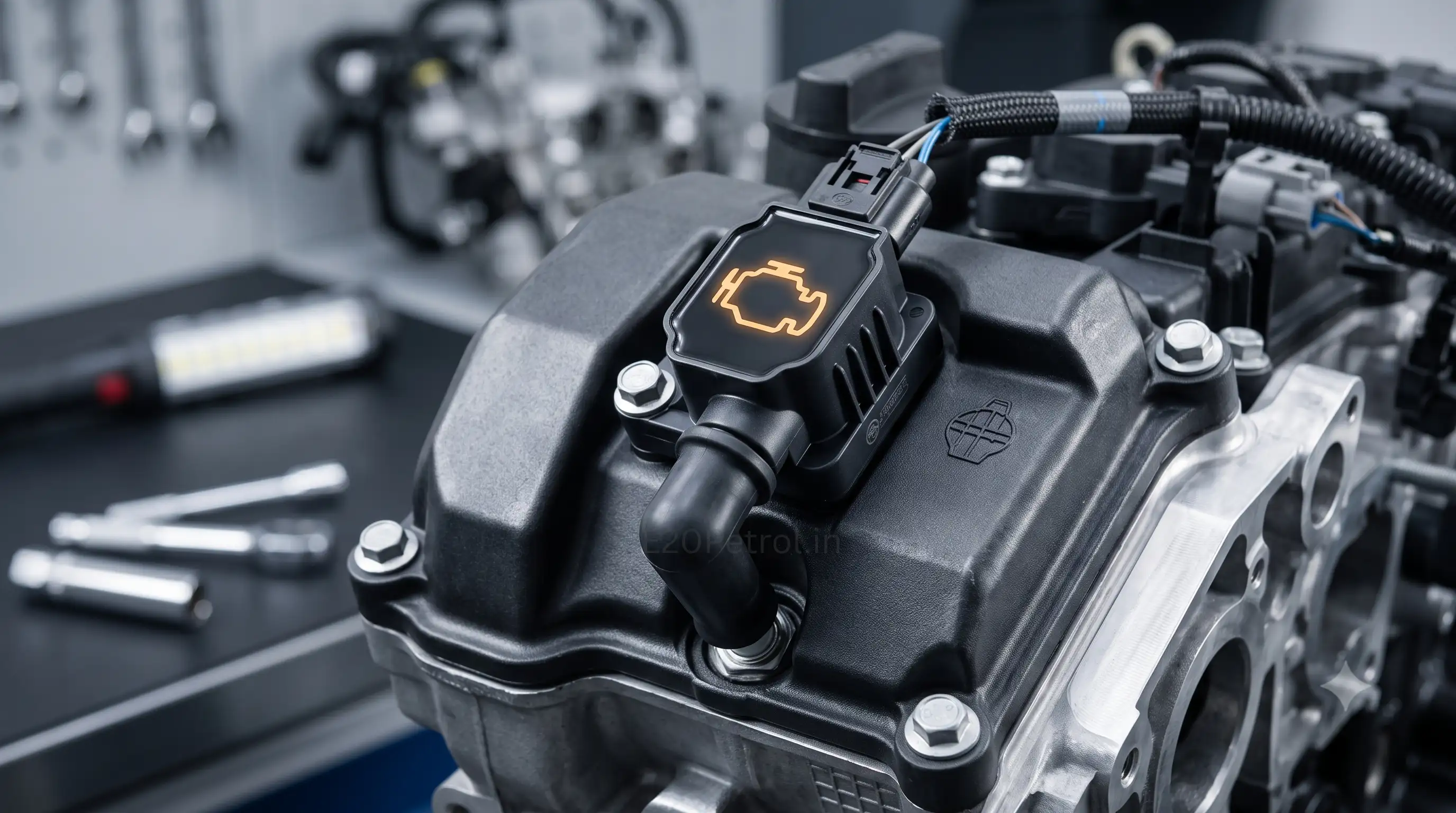
After XP100 crossed Rs 160 per litre in 2026, a parallel market question began appearing with increasing frequency in Indian automotive communities: can I just add a booster to XP95 and get the same result for less? The chemicals being discussed, Ferrocene, N-Methyl Aniline (NMA), and Methylcyclopentadienyl Manganese Tricarbonyl (MMT), are genuine octane boosters. At low doses they do elevate the Research Octane Number of petrol. Sellers of these products will show you the octane test results and they are real. What the sellers do not show you is what these chemicals leave behind in the combustion chamber, on the spark plug electrodes, inside the oxygen sensor housing, and on the catalytic converter substrate. This article covers both sides, the chemistry that makes these boosters work, and the chemistry that makes them damaging. Table of ContentsWhy Aftermarket Octane Boosters Exist How Ferrocene Works, and What It Deposits NMA, Effective but Carcinogenic and Sensor-Damaging MMT, The Most Common and the Most Documented Failure Mode Why Refinery-Blended XP100 Is Different The Honest Assessment, When to Use Boosters and When Not To SourcesWhy Aftermarket Octane Boosters Exist The gap between XP95 at Rs 115 and XP100 at Rs 160 in mid-2026 created an obvious commercial opportunity. If you can add a small quantity of a chemical to XP95 and raise its octane from 95 to 100, you save Rs 45 per litre while achieving the same knock resistance. This logic is not wrong in its first step. The chemicals that constitute the aftermarket octane booster market are genuinely effective at raising octane numbers. They are used in various concentrations in racing fuels, aviation fuel formulations, and in some countries as legal petrol additives. The octane increase they produce is measurable and real. The problem is that raising octane number is not the only thing these chemicals do when added to petrol and combusted in a modern BS6 engine. The combustion byproducts of metallic octane boosters are inorganic compounds that do not pass cleanly through the exhaust system. They accumulate on and in the components designed to manage exhaust chemistry, spark plugs, oxygen sensors, and catalytic converters, with consequences that are expensive to address and not covered by any vehicle warranty. How Ferrocene Works, and What It Deposits Ferrocene is an organometallic compound, a molecule in which an iron atom is sandwiched between two cyclopentadienyl rings. Its chemical formula is Fe(C₅H₅)₂. It is orange-coloured, soluble in petrol, and acts as a free-radical scavenger in the combustion chamber. By interrupting the chain reactions that lead to auto-ignition, it effectively raises the octane rating of the fuel it is added to. At concentrations of 0.2 to 0.5 ml per litre, octane gains of 2 to 4 RON are achievable. When Ferrocene burns, the iron-containing portion of the molecule oxidises to form iron oxide, rust, in familiar terms, though in particle form. These iron oxide particles are solid at exhaust temperatures and accumulate on spark plug electrodes, forming a conductive layer of metallic deposits. This deposit layer creates a low-resistance path for the ignition current that bypasses the spark gap. The spark plug misfires, or fires at the wrong moment, because the ignition energy bleeds across the deposit rather than discharging across the intended gap. The result is a progressive degradation of ignition quality. Cold-start difficulty, rough idle, and reduced fuel economy appear first. If the deposits are not addressed, and they require physical cleaning or plug replacement to address, not just switching fuels, the misfires worsen. On a modern BS6 vehicle, persistent misfires trigger the check-engine light and set an OBD diagnostic code. Service centres will find fouled spark plugs and may not immediately identify Ferrocene as the cause. Beyond the spark plugs, iron oxide particles that pass through to the exhaust system deposit on the catalytic converter substrate. Catalytic converters in BS6 vehicles use platinum and palladium as catalysts on a ceramic or metallic substrate. Iron oxide is not a catalyst, it is a contaminate that physically blocks the substrate pores and reduces the surface area available for catalytic reactions. Over time, converter efficiency falls, tailpipe emissions rise, and the vehicle may fail emission testing. NMA, Effective but Carcinogenic and Sensor-Damaging N-Methyl Aniline is an aromatic amine, a nitrogen-containing organic compound derived from aniline. It is one of the more effective octane boosters available, capable of raising RON by 3 to 6 points at concentrations of 1 to 2 ml per litre. Some European countries have permitted NMA as a fuel additive at controlled concentrations, and it was historically blended into racing fuels before the widespread adoption of oxygenates. The first concern with NMA is occupational and consumer safety. N-Methyl Aniline is a suspected carcinogen. It is absorbed through skin contact as well as inhalation, which means handling concentrated NMA during the refuelling process, particularly if it spills, carries a health risk that is absent when using pump-dispensed XP100. International chemical safety databases classify NMA as hazardous with specific handling requirements that the average consumer refuelling their vehicle does not follow. The second concern is the effect on the lambda sensor. Modern BS6 vehicles use a wideband oxygen sensor (often called a lambda sensor or O2 sensor) mounted in the exhaust stream before the catalytic converter. This sensor continuously measures the oxygen content of the exhaust gas and sends that data to the ECU, which uses it to maintain the correct air-fuel ratio. NMA combustion byproducts contaminate the zirconia sensing element inside the lambda sensor, degrading its response accuracy. A degraded lambda sensor causes the ECU to run a slightly incorrect air-fuel ratio, typically richer than optimal, which increases fuel consumption and increases unburnt hydrocarbons in the exhaust. Lambda sensor replacement in Indian BS6 vehicles typically costs between Rs 3,000 and Rs 8,000 including labour, depending on the model. The sensor is not a wear item under normal operation and is not covered under standard warranty if additive contamination is identified as the cause. MMT, The Most Common and the Most Documented Failure Mode Methylcyclopentadienyl Manganese Tricarbonyl, MMT, is the most widely available octane booster in the Indian aftermarket and has the most extensively documented failure mode. MMT has been used as a petrol additive in some jurisdictions, including Canada, at controlled concentrations in the parts-per-million range. Aftermarket products sold in India typically contain MMT in concentrations that are orders of magnitude higher than regulatory limits in countries that permit its use. MMT raises octane through a similar free-radical interruption mechanism to Ferrocene. Its combustion byproduct is manganese oxide, a reddish-brown compound that deposits on spark plug electrodes, oxygen sensor elements, and catalytic converter substrates with the same accumulation pattern as iron oxide from Ferrocene, but documented at higher rates and with more consistent check-engine light triggers. The specific failure pattern documented in automotive forums and technical literature is distinctive. MMT deposits on spark plug electrodes build a solid, non-conductive crust that increases the effective spark gap resistance. The ignition system must deliver more voltage to overcome this resistance. The increased voltage demand eventually exceeds what the ignition coil can reliably produce, causing misfires under load. On turbocharged engines, misfires under boost pressure trigger immediate ECU protection responses, boost reduction, timing retardation, and sometimes a fuel cut, producing a sudden, noticeable loss of power that is alarming in traffic. Catalytic converter contamination from MMT is documented as permanent. Unlike carbon deposits, which can be partially cleaned by high-temperature operation or specific detergent additives, manganese oxide deposits on catalytic substrates do not burn off. A converter that has received sustained MMT-contaminated exhaust requires physical replacement, a repair that costs between Rs 15,000 and Rs 60,000 depending on the vehicle, and is explicitly excluded from warranty coverage when additive use is identified. Why Refinery-Blended XP100 Is Different XP100 achieves its 100 RON rating through MTBE, Methyl Tertiary-Butyl Ether, blended at the refinery at approximately 12.38% by volume, combined with the high-octane blending components produced by IOCL's proprietary Octamax process. MTBE is an ether, not a metallic compound. When it combusts, it produces carbon dioxide, water vapour, and trace organic acids, the same categories of compounds produced by ethanol and other oxygen-containing fuel components. It does not produce metallic oxides. The term for this property is "ashless." MTBE is an ashless octane booster, it raises octane number without leaving inorganic solid residues in the combustion chamber, on spark plug electrodes, in the oxygen sensor, or on the catalytic converter. This is why IOCL describes XP100 as safe for all BS6 vehicles and why performance car owners who run 100 RON fuel continuously do not see accelerated spark plug fouling or catalytic converter degradation. The refinery-blending process also ensures that MTBE is distributed homogeneously throughout the fuel at a precise concentration, tested under BIS quality standards, and consistent across batches. Aftermarket octane booster products are added manually at variable concentrations by the consumer, with no quality assurance on the homogeneity of the resulting mix or the actual RON achieved. The Honest Assessment, When to Use Boosters and When Not To For engines that genuinely need 100 RON, high-compression performance vehicles, VW Group EA888 Evo4 engines, vehicles with 98 RON minimum requirements in the owner manual, the only safe route to that octane level in India is XP100 from an IOCL COCO outlet, or HPCL Power 100 or BPCL Speed 100 as direct equivalents. These are the only ashless, quality-assured 100 RON fuels commercially available. Aftermarket metallic octane boosters should not be used in any vehicle that has an oxygen sensor or a catalytic converter. That covers every BS6 vehicle sold in India since April 2020. The octane gain they provide is real but the damage they accumulate is also real, progressive, and expensive, and it voids warranty on the components it damages. The one context where aftermarket boosters carry lower risk is pre-BS6 carburetted vehicles with no lambda sensor and no catalytic converter. These engines have neither the oxygen sensing nor the exhaust aftertreatment that metallic combustion byproducts damage. Even in this context, spark plug fouling remains a concern and requires more frequent plug inspection than standard intervals. This does not constitute an endorsement, it is an acknowledgement that the risk profile is different. For any modern fuel-injected BS6 vehicle, the calculation is straightforward. The cost of replacing a contaminated oxygen sensor and catalytic converter far exceeds any savings from using a cheap octane booster instead of XP100. If the engine genuinely needs 100 RON, use XP100. If it does not need 100 RON, use XP95 or regular E20. There is no cost-effective middle path that involves aftermarket metallic additives. SourcesComparing Common Octane Booster Chemicals: MMT, NMA, Ethanol, MTBE and Ferrocene, Minal Specialities Fuel Properties, MTBE, Oxygenates, RON, IEA-AMF IOCL XP100, Official Product Page, Ashless MTBE Composition Octamax Technology, IOCL R&D Leaflet How Much Ethanol Is in Your Petrol?, Autocar India Speed 97 and High RON Petrol Discussion, MMT and Booster Discussion, Team-BHP E20 or Premium Petrol? Understanding Ethanol Blending, Auto Punditz
- Editorial Team
- 11 Jul, 2026
What Is the Octamax Process? How IndianOil Makes 100 RON Petrol in India
Most Indian drivers know XP100 as the ethanol-free 100 RON petrol that costs Rs 160 per litre and is available at a handful of IOCL pumps. Fewer know that it exists only because of a proprietary refining technology developed entirely by IndianOil's own R&D team, and that this technology, called Octamax, earned its inventors the National Technology Award in 2022. The commercial availability of 100 RON petrol at Indian pumps is not simply a matter of importing premium fuel components or buying a foreign-licensed process. It is the result of Indian refining engineers solving a specific and difficult problem: how to produce ultra-high-octane gasoline in a BS6-compliant refinery without using toxic lead additives and without making the fuel prohibitively expensive. This article explains what the Octamax process is, what problem it solved, and why it matters to every Indian vehicle owner who has ever wondered why 100 RON petrol costs what it costs. Table of ContentsThe Octane Problem That BS6 Created What the Octamax Process Does The Mathura Refinery Commissioning, January 2018 Why Octamax Outperforms Conventional Alkylation What This Means for the Price and Availability of XP100 India as a Technology Licensor, The Broader Significance SourcesThe Octane Problem That BS6 Created Before understanding what Octamax does, it helps to understand the problem it was built to solve. Petroleum refineries produce petrol by processing crude oil through several conversion units. Fluid Catalytic Cracking (FCC) units crack heavy hydrocarbon molecules into lighter fractions. Catalytic reformers convert low-octane naphtha into high-octane aromatic compounds. Isomerisation units upgrade light naphtha. The gasoline pool, the blended output from all these units, has a natural octane rating that depends on the specific crudes processed and the severity of the refining operations. When India moved to BS6 emission standards, refineries were required to dramatically reduce the sulphur content of petrol from 50 parts per million (BS4) to 10 parts per million (BS6). Achieving this required deep hydrodesulphurisation of the FCC gasoline stream, the largest single contributor to the gasoline pool. Hydrodesulphurisation removes sulphur by reacting it with hydrogen at elevated temperature and pressure. The process is effective at sulphur removal but has a side effect: it also saturates some of the aromatic and olefinic molecules in the FCC stream that were contributing to octane. The resulting desulphurised FCC gasoline has lower octane than its pre-treatment feedstock. This is the octane penalty of BS6. Refineries that had been producing 91 RON regular petrol comfortably found that BS6 desulphurisation had tightened their octane headroom. Producing 100 RON petrol, which requires a gasoline pool well above 100 RON to allow for blending losses, became significantly more difficult without either importing premium blending components, using metallic octane boosters (which have their own problems, as covered in the octane boosters article), or developing a new high-octane production process. IOCL chose the third path. What the Octamax Process Does The Octamax process converts C4 hydrocarbon streams into a high-octane gasoline blending component. C4 streams, butanes and butylenes, are generated in significant quantities as byproducts of FCC units and naphtha crackers. In many refineries, these light hydrocarbons are consumed as refinery fuel, blended into LPG, or sold as chemical feedstocks at relatively low value. Octamax captures these C4 streams and processes them through a proprietary catalytic reaction to produce an ultra-high-octane gasoline blending component. The specific chemistry of the reaction is proprietary to IOCL, but the category of process involves oligomerisation or alkylation-type reactions that build larger, highly branched molecules from the C4 feedstock. Highly branched molecules are the chemical basis of high octane, iso-octane, the 100 RON reference standard itself, is a highly branched eight-carbon molecule. The resulting Octamax product has a blending RON of greater than 120. When this component is blended into the gasoline pool at appropriate concentrations, it upgrades the overall pool octane without requiring imported high-octane components, without using metallic additives, and without ethanol. Combined with MTBE as the oxygenate, it provides the octane foundation for XP100's 100 RON rating. The first Octamax unit at Mathura processed 55 kilo-tonnes per annum of C4 feedstock when commissioned. The first product samples from the unit yielded a blending octane number of 118, comfortably above the 108 RON guaranteed in the project specification and above the 120 RON design target for the blending component (the blending value in the pool is different from the product's pure octane, depending on blend concentration). The Mathura Refinery Commissioning, January 2018 The first commercial Octamax unit was commissioned at IOCL's Mathura Refinery in Uttar Pradesh in January 2018. Mathura is one of IOCL's largest refining facilities and is strategically located for supplying the Delhi-NCR market, which is also the primary initial market for premium XP100 fuel. The commissioning was executed without cost overruns, which IOCL's R&D and project teams noted as significant given that the process had no prior commercial precedent. The technology was designed, built, and operated with indigenous expertise, no foreign technology licence was required, no foreign catalyst was procured. The catalyst used in the Octamax process is non-toxic, an improvement over the hydrofluoric or sulphuric acid catalysts used in conventional alkylation units that perform a similar function in Western refineries. The operating parameters of the Octamax unit, moderate temperature, moderate pressure, non-hazardous catalyst, give it a lower operational risk profile than conventional alkylation, which handles highly toxic acids under pressure. This translates to lower insurance and safety compliance costs and a more manageable maintenance profile. The commercial launch of XP100 followed the Mathura commissioning. The fuel's initial availability in ten tier-1 cities in 2020 was enabled directly by the Octamax blending component produced at Mathura. As IOCL expands XP100 availability and as additional Octamax capacity may come online at other refineries, the production constraint on XP100 becomes less a question of refining capability and more a question of distribution infrastructure and market demand. Why Octamax Outperforms Conventional Alkylation The standard industry approach to producing high-octane gasoline blending components without ethanol is conventional alkylation. Alkylation units react isobutane with olefins (primarily butylene) in the presence of a strong acid catalyst, either sulphuric acid (H2SO4) or hydrofluoric acid (HF), to produce alkylate, a high-octane, low-vapour-pressure blending component with a RON typically between 92 and 98. Alkylate is an excellent fuel component. It contains highly branched paraffinic molecules, burns cleanly, has low sulphur content, and raises the octane of the gasoline pool effectively. Every major Western refinery with a significant premium fuel programme uses alkylation. The problem with conventional alkylation is the acid. Both sulphuric and hydrofluoric acid are acutely hazardous materials that require specialised handling infrastructure, comprehensive safety protocols, acid management systems, and significant regulatory compliance overhead. HF alkylation is particularly concerning because HF can form a toxic aerosol cloud in the event of a release, a risk that has led to regulatory pressure and facility shutdowns at several global refineries. Octamax achieves a similar output, high-octane, branched-molecule gasoline blending components, through a non-acid catalytic process. The non-toxic catalyst eliminates the acid handling infrastructure, reduces occupational safety risk, simplifies regulatory compliance, and lowers the capital and operating cost barrier compared to conventional alkylation. For a refinery operating in India's regulatory environment, this is a meaningful commercial advantage. The Octamax product's blending RON of greater than 120 also compares favourably to conventional alkylate at 92 to 98 RON. The higher intrinsic octane means less Octamax product is required to achieve the same pool octane upgrade, a volume efficiency advantage in the blending operation. What This Means for the Price and Availability of XP100 XP100 is expensive for two reasons. The first is the cost of MTBE, which is imported and priced in international markets that reflect global chemical feedstock prices. The second is the capital and operating cost of the Octamax unit itself, a specialised conversion unit that adds refinery complexity and requires maintenance and catalyst management. Neither cost is discretionary. They are structural to the product's chemistry and the refining process that produces it. IOCL's COCO-only distribution model adds further cost through the requirement for direct operational oversight of every selling point. And XP100's low volume means it cannot benefit from the economies of scale that bring the cost of regular petrol down, the Octamax production runs, the MTBE procurement, and the distribution operations are spread across a much smaller number of litres sold. The Rs 160 per litre price at mid-2026, following an Rs 11 single-day price hike triggered by West Asia crude market volatility, reflects all these structural costs plus the market premium IOCL can command for a genuinely unique product. There is no other source of 100 RON, ethanol-free petrol in the Indian market. XP100, Power 100 (HPCL), and Speed 100 (BPCL) are the only options, and all three OMC products face the same underlying cost structure. The implication for buyers is that XP100's price is not likely to fall materially as long as its cost structure remains what it is. The product will remain niche, expensive, and available at a limited number of COCO outlets, by design rather than by oversight. India as a Technology Licensor, The Broader Significance The National Technology Award that IOCL's Octamax team received in 2022 under the category "Successful Commercialization of Indigenous Technology" is not merely a domestic recognition. It positions IOCL as a potential technology licensor to other refineries globally that face the same octane-penalty problem from BS6-equivalent deep desulphurisation. Countries in Southeast Asia, Africa, and the Middle East are implementing progressively stricter fuel quality standards that create the same refinery octane challenge India faced. A non-acid, non-toxic catalytic process for high-octane gasoline blending that is commercially proven at scale, and available for licence rather than requiring independent development, has export value. For the Indian vehicle owner, the significance is more immediate: the existence of a domestically developed, domestically produced 100 RON petrol at a commercial scale means that XP100 will continue to be available as long as IOCL maintains the Octamax units and the product demand justifies the distribution cost. The supply chain is not dependent on imported technology, imported catalysts, or foreign technology agreements that could be disrupted by trade conditions. It is, as IOCL notes in its product positioning, a genuinely Indian fuel. SourcesOctamax Technology, IOCL R&D Leaflet, C4 to High-Octane Gasoline IndianOil Commissions Octamax Unit at Mathura Refinery, Europétrole IOCL News Release, Octamax Commissioning and National Technology Award IOCL XP100, Official Product Page How Much Ethanol Is in Your Petrol?, Autocar India Fuel Properties, MTBE and Oxygenate Chemistry, IEA-AMF Indian Oil Is Selling XP100 at Rs 160/L, What Does It Contain?, Reddit r/CarsIndia
- Editorial Team
- 10 Jul, 2026
What Is MTBE and Why Does XP100 Use It Instead of Ethanol?
When people ask why XP100 does not contain ethanol while XP95 does, the answer is one word: MTBE. XP100 uses Methyl Tertiary-Butyl Ether as its oxygenate instead of ethanol, and that substitution is not arbitrary. It is a deliberate chemical engineering choice with consequences for octane, storage stability, fuel system compatibility, and the phase separation risk that makes E20 problematic for older vehicles. Understanding what MTBE is and what it does differently from ethanol clarifies not just why XP100 is priced at Rs 160 per litre, but why it remains the only commercially available option for Indian vehicle owners who need an ethanol-free petrol at the pump. Table of ContentsWhat MTBE Is, Chemistry Without the Jargon Why MTBE Raises Octane More Efficiently Than Ethanol The Phase Separation Difference, Why MTBE Stays Stable What MTBE Does Not Do to Fuel System Components Why XP100 Can Sit in a Storage Tank Without Degrading The MTBE Controversy Globally, Context for India SourcesWhat MTBE Is, Chemistry Without the Jargon MTBE stands for Methyl Tertiary-Butyl Ether. It is a synthetic organic compound manufactured through an acid-catalysed reaction between methanol and isobutylene, isobutylene being a light hydrocarbon produced as a byproduct of petroleum refining and petrochemical processes. The resulting molecule is a colourless, volatile liquid with a characteristic ether odour and a boiling point of 55.2 degrees Celsius. MTBE belongs to the ether family of organic compounds, molecules characterised by an oxygen atom bonded between two carbon groups. This oxygen atom is what makes MTBE useful as a fuel oxygenate. When burned in an engine, the oxygen bound within the MTBE molecule contributes to more complete combustion of the hydrocarbon fuel, reducing carbon monoxide and unburnt hydrocarbon emissions in the exhaust. This was the original reason MTBE was adopted as a petrol additive in the United States in the 1990s, as part of the Reformulated Gasoline programme designed to reduce urban air pollution. In XP100, MTBE is present at approximately 12.38% by volume. This concentration provides the oxygenate load required by BIS fuel quality standards while contributing significantly to the fuel's octane rating through its own anti-knock properties. Why MTBE Raises Octane More Efficiently Than Ethanol The pure Research Octane Number of MTBE is exceptional, ranging from 115 to 135 RON depending on the measurement method, with Motor Octane Number values between 98 and 110. These figures place MTBE among the most effective octane-raising agents available to refinery blenders. At 12.38% concentration in XP100, MTBE contributes substantially to the fuel's 100 RON rating. The Octamax process components from IOCL's Mathura Refinery, high-octane blending streams with a blending RON above 120, provide the remainder. Together, they produce a finished fuel that achieves 100 RON without any ethanol in the blend. Ethanol has a high RON of approximately 108.5, but it comes with energy density and hygroscopic compromises that MTBE does not share. Ethanol at 20% concentration in E20 reduces the fuel's overall energy content by approximately 3% to 4% relative to pure petrol. MTBE, which has a higher energy density than ethanol, does not impose the same energy penalty at its blend concentration. XP100 therefore has higher energy content per litre than E20, one of the reasons high-compression engines return better efficiency on XP100 beyond the timing advance benefit. MTBE also has a particularly useful property called high Front-End Octane Number (FEON). FEON measures the octane rating of the fuel fractions that boil below 100 degrees Celsius, the components that vaporise first during cold starts and low-speed, low-load operation. MTBE's boiling point of 55.2 degrees means it enters the vapour phase early and contributes its high anti-knock quality to cold-start and low-speed combustion, where knock can be a problem even in engines that handle highway load without issue. The FEON of MTBE can reach 135 RON, significantly higher than comparable early-boiling hydrocarbon fractions. The Phase Separation Difference, Why MTBE Stays Stable Phase separation is the failure mode that makes E20 problematic for vehicles stored with a partial tank. Ethanol is hygroscopic, it absorbs water from the atmosphere. In a sealed fuel tank, the headspace above the fuel contains air. Air contains water vapour. Over days and weeks, the ethanol in the fuel absorbs this moisture. Once the water concentration in the ethanol-petrol blend crosses a threshold, the water-ethanol mixture becomes immiscible with the hydrocarbon fuel and separates, sinking to the tank bottom as a dense, corrosive layer. This threshold is temperature-dependent and concentration-dependent, but in Indian monsoon conditions, high ambient humidity, diurnal temperature swings, it is reachable in partially filled steel tanks within a few weeks of stationary storage. BIS IS 2796:2017 specifies a maximum water tolerance temperature of 10 degrees Celsius for phase separation in summer conditions, acknowledging the real risk in the Indian climate. MTBE has a fundamentally different relationship with water. Its water solubility at saturation is approximately 4.2% by weight, a defined limit beyond which MTBE does not mix further with water. Critically, MTBE does not actively absorb water from the atmosphere the way ethanol does. It does not pull moisture from headspace air. A tank of XP100 sitting in a partially filled state does not accumulate a water-ethanol layer at the bottom because there is no ethanol to carry the water into solution. For vehicle owners who store their bikes or cars for weeks at a time, or who use their vehicles seasonally, this stability difference is the primary reason XP100 is recommended over E20 for storage preparation. A tank filled with XP100 before a three-month storage period will be chemically unchanged when the vehicle is recommissioned. A tank filled with E20 under the same conditions may have undergone partial phase separation, with a dilute water-ethanol layer awaiting the fuel pump when the engine is restarted. What MTBE Does Not Do to Fuel System Components Ethanol's solvent properties affect rubber and plastic components in older fuel systems. Nitrile rubber (NBR), the standard elastomer in fuel hoses, float bowl gaskets, and injector O-rings manufactured before the E20 era, absorbs ethanol and swells. The swelling softens the rubber, reduces its mechanical strength, and eventually causes cracking, weeping, and fuel leaks. Ethanol's electrical conductivity also contributes to galvanic corrosion in zinc-alloy carburettor components and aluminium fuel rails in older designs. MTBE does not share these properties in the same way. At 12.38% concentration in XP100, MTBE has minimal swelling effect on NBR compounds compared to 19.88% ethanol in E20. The chemical interaction between ethers and elastomers is less aggressive than between alcohols and elastomers at equivalent concentrations. Vintage and classic vehicle owners who use XP100 as a preservation fuel are relying on this difference, MTBE provides the oxygenate load required by fuel quality standards without the corrosive interaction with period-correct fuel system materials that ethanol causes. This does not mean MTBE is entirely inert in older fuel systems. At high concentrations it can soften some plastics and has limited solubility in certain polymer compounds. But at 12.38% in a finished petrol blend, the practical compatibility with pre-E20 fuel system materials is significantly better than E20's 19.88% ethanol content. Why XP100 Can Sit in a Storage Tank Without Degrading IndianOil distributes XP100 exclusively through Company-Owned and Company-Operated (COCO) retail outlets. Part of the reason for this distribution model is quality control, but another part is the fuel's own chemistry. Because XP100 does not contain ethanol, it does not undergo the moisture-absorption and phase separation that can make E20 petrol hazardous after extended underground storage at low-turnover stations. A conventional E20 petrol tank at a rural pump that sees three or four customers per day has slow turnover. The fuel sits in the underground tank for weeks. In high-humidity conditions, the ethanol in the blend slowly absorbs moisture through tank vents and seals. The received fuel may be technically within specification but at the edge of its water tolerance. This is one reason high-turnover urban outlets are preferred over rural stations for older vehicles running on E20. XP100's MTBE base does not undergo this moisture accumulation. The product in the underground storage tank at a COCO outlet is chemically stable for extended periods. Combined with the quality control of IOCL-operated distribution, XP100 at the pump is consistent with XP100 at the refinery exit, a consistency that matters to the performance and exotic vehicle owners it is designed to serve. The MTBE Controversy Globally, Context for India MTBE is not without controversy. In the United States, MTBE was phased out of petrol between 2000 and 2006 following groundwater contamination incidents. MTBE's high water solubility relative to other petrol components means that when underground storage tanks leaked, MTBE migrated into groundwater supplies faster than the hydrocarbon components of the fuel. A single leaking underground tank could contaminate a water supply with detectable MTBE concentrations over a wide area. The US response was to mandate ethanol as the replacement oxygenate, which does not contaminate groundwater in the same way because it biodegrades rapidly in aerobic soil conditions. In India, this context is relevant but the risk profile is different. IOCL's XP100 distribution through COCO outlets means the underground storage infrastructure is maintained to IOCL standards, with more rigorous tank integrity monitoring than a franchise dealer operation. The volume of XP100 in circulation is also a fraction of regular petrol, limiting the aggregate contamination risk even if tank integrity were compromised. The Indian regulatory position has not prohibited MTBE for petrol blending. BIS fuel standards permit it as an oxygenate, and IOCL's active use of MTBE in XP100 reflects a judgment that its performance benefits for a specific market segment outweigh the contamination risks in the Indian infrastructure context. This position may evolve as E85 and higher ethanol blends expand and MTBE supply dynamics change, but for now XP100 with MTBE remains in active commercial production and distribution. SourcesIOCL XP100, Official Product Page, MTBE Composition Fuel Properties, MTBE Chemistry, RON, Water Solubility, IEA-AMF How Much Ethanol Is in Your Petrol?, Autocar India, Gas Chromatography Testing What Are Oxygenates?, MTBE and Ethanol Comparison, Sustainable Fuels EU Octamax Technology, IOCL R&D Leaflet, Mathura Refinery Comparing Common Octane Booster Chemicals: MTBE, Minal Specialities E20 Petrol Row, What Is XP100, Is It Really Ethanol-Free?, LiveMint
-
 Ajit Khandekar
 - 09 Jul, 2026
The Chemistry of Ethanol-Induced Rust, How Acetic Acid and Acetobacter Attack Your Fuel Tank
Most riders assume ethanol rusts a fuel tank simply because ethanol attracts water, and water rusts steel. That is part of the story, but it misses the mechanism that does the most damage in a real Indian fuel tank left standing between rides. The worst corrosion is not caused by water directly. It is caused by an acid that did not exist in the tank when you last filled up, an acid that living bacteria manufacture out of the ethanol itself. This article explains the chemistry from first principles, names the organism responsible, and shows why a half-empty tank in humid weather is the single most corrosive condition you can create. Understanding the mechanism is what makes the prevention advice, keep the tank full, ride regularly, stabilise stored fuel, make sense instead of sounding like folklore. Table of ContentsWhat Is Actually Inside E20 Petrol Why Ethanol Pulls Water Out of the Air Who Is Acetobacter and How Does It Get Into a Fuel Tank The Reaction, Ethanol to Acetic Acid Step by Step How Acetic Acid Corrodes Steel Why a Half-Empty Tank Is the Worst Case What This Means for Your Vehicle SourcesWhat Is Actually Inside E20 Petrol E20 petrol is 20 percent ethanol by volume, blended into 80 percent conventional petrol. Ethanol is a small alcohol molecule, two carbons, with a hydroxyl (OH) group on the end. That OH group is the source of nearly every property that makes ethanol behave differently from petrol inside your tank: it makes ethanol mix with water, it makes ethanol a food source for certain microbes, and it is the chemical starting point for the acid that does the corroding. Conventional petrol is a mixture of hydrocarbons that neither absorbs water nor feeds bacteria in any meaningful way. Add ethanol, and you have introduced both a water magnet and a microbial food source into a steel container that spends most of its life parked. Why Ethanol Pulls Water Out of the Air Ethanol is hygroscopic, meaning it actively absorbs water from the surrounding air. The hydroxyl group forms hydrogen bonds with water molecules, so ethanol will pull moisture out of humid air through the tank vent until it reaches an equilibrium. In a dry climate this is slow. During an Indian monsoon, with relative humidity above 80 percent for weeks, a vented tank draws in and holds a surprising amount of water. Up to a point, that water stays dissolved in the ethanol-petrol blend and does no harm. Past that point, the water and ethanol separate out together and sink to the bottom of the tank as a distinct layer. This is phase separation, and the water-rich layer that forms at the tank bottom is where the real trouble begins, because it sits directly against the steel and it is the ideal habitat for the bacteria that come next. Who Is Acetobacter and How Does It Get Into a Fuel Tank Acetobacter is a genus of bacteria whose defining trick is turning ethanol into acetic acid. It is the same family of organisms used deliberately to make vinegar from wine. These bacteria are everywhere, in air, on surfaces, in trace water, and they need only three things to go to work: ethanol as food, water to live in, and oxygen. A partly filled fuel tank in warm, humid conditions provides all three at once. The bacteria colonise the interface between the fuel and the water layer at the bottom of the tank, where food, water, and air are all within reach. They do not need to be introduced deliberately. Ambient contamination through the vent and from fuel handling is enough to seed a tank. The Reaction, Ethanol to Acetic Acid Step by Step The bacteria carry out a two-step oxidation of ethanol. First, ethanol is oxidised to acetaldehyde. Second, acetaldehyde is oxidised to acetic acid. The net result, using oxygen from the air in the tank, is that each ethanol molecule becomes a molecule of acetic acid and water: Ethanol + oxygen produces acetic acid + water. Acetic acid is the acid that gives vinegar its sourness and its bite. In a fuel tank it accumulates in the bottom water layer, and unlike neutral water it aggressively attacks steel. The reaction also produces more water, which feeds the phase-separation problem, so the process is self-reinforcing once it starts. Two points make this worse in practice. The bacteria multiply, so the rate of acid production accelerates as the colony grows. And acetic acid is not consumed by attacking the steel in a way that neutralises it quickly, so acidity builds up over weeks of standing. How Acetic Acid Corrodes Steel Steel corrodes when iron atoms give up electrons and dissolve into solution as iron ions, and acid dramatically speeds this up by supplying hydrogen ions that carry the reaction forward. Acetic acid attacks the iron directly, producing iron acetate and hydrogen gas, and it also keeps the local environment acidic enough that ordinary rusting proceeds far faster than it would in neutral water. The visible result is the reddish-brown iron oxide, rust, familiar from any corroded tank, but it forms far more rapidly and more deeply than water alone would produce. Pitting is common, because the attack concentrates at flaws in the protective coating and at the seam weld, where the steel is metallurgically different. Those pits become the pinholes and the flakes that eventually clog a carburettor jet or a fuel filter. Why a Half-Empty Tank Is the Worst Case A half-empty tank maximises every input the corrosion process needs. The large air space above the fuel holds humid air the ethanol can draw water from, and it holds the oxygen the bacteria need to make acid. The generous fuel-to-air surface gives water somewhere to condense and gives the bacterial colony a broad interface to grow along. And fuel left standing gives the bacteria the weeks of undisturbed time they need to build up damaging acid concentrations. A full tank starves the process on two fronts at once: there is very little air space, so little humidity and little oxygen enter, and the fuel is used and replaced regularly rather than sitting still. This is the chemistry behind the standard advice to keep the tank above half, especially through the monsoon and especially for a vehicle that is parked for days at a time. What This Means for Your Vehicle If you ride daily and keep the tank reasonably full, the fuel never stands long enough for a bacterial colony to establish, and this whole chain rarely gets going. The vehicles at real risk are the ones that sit, a second bike, a monsoon-parked commuter, a car used only on weekends, especially with a tank near empty in humid weather. The prevention follows directly from the chemistry. Keep the tank full to cut out air, water, and oxygen. Ride or run the engine regularly so fuel is turned over instead of standing. For genuine long-term storage, fill the tank and use a fuel stabiliser designed for ethanol blends. And if your vehicle has already been standing with low fuel through a monsoon, inspect the fuel filter for rust particles before the problem travels downstream into the carburettor or fuel pump. The mechanical symptoms, diagnosis, and repair options are covered in our companion guide on E20 petrol and fuel tank corrosion, and the water-separation side of the problem is explained in phase separation in ethanol petrol. For where all of this sits in the national fuel transition, see the India ethanol blending roadmap. SourcesScienceDirect, Corrosion Behaviour of Aluminium Alloy in Bio-Ethanol Blended Gasoline, 2025 ScienceInsights, How Does Ethanol Damage Engines: Corrosion to Clogs, March 2026 Bureau of Indian Standards, IS 2796 E20 Petrol Specification Ministry of Petroleum and Natural Gas, Ethanol Blending Programme
- Editorial Team
- 06 Jul, 2026
What Is Engine Knock and Why Does Your ECU Retard Timing to Stop It?
If you have ever asked why fuel grade matters for your engine, the answer comes down to one phenomenon: engine knock. Everything else, RON ratings, ECU calibration, timing advance, the difference between XP95 and XP100, is downstream of this single combustion event. Understanding what knock is, what it does to an engine, and how the ECU responds to it is the foundation for every fuel decision you will make as an Indian vehicle owner in the E20 era. It explains why a turbocharged Hyundai Creta benefits from XP95 but a Splendor does not. It explains why 100 RON matters for a BMW M-series but is irrelevant for a Honda City. And it explains why running the wrong fuel in a high-compression engine is not just a performance issue, it is a mechanical damage issue. Table of ContentsWhat Engine Knock Actually Is What Knock Does to Engine Components How the ECU Detects and Responds to Knock The Performance Penalty of Timing Retardation Why RON Determines How Much Headroom Your ECU Has Which Indian Engines Are Most Sensitive to Fuel Grade SourcesWhat Engine Knock Actually Is In a petrol engine, the four-stroke combustion cycle works like this. The piston descends on the intake stroke, drawing in an air-fuel mixture. It rises on the compression stroke, compressing that mixture to a fraction of its original volume. At the precise moment the piston reaches the top of its travel, the spark plug fires, igniting the mixture in a controlled burn that pushes the piston down on the power stroke. Finally, the exhaust stroke expels the burnt gases. The critical word in that sequence is "controlled." The spark plug is supposed to be the trigger. When it fires, a flame front propagates outward from the spark plug electrode, burning through the compressed air-fuel mixture in an orderly expansion. The pressure wave from this combustion pushes the piston down smoothly and consistently, delivering torque to the crankshaft. Engine knock occurs when the air-fuel mixture auto-ignites before the spark plug fires. The heat and pressure of the compression stroke, combined with the chemistry of the fuel itself, cause portions of the unburned mixture to spontaneously combust ahead of the advancing flame front. This creates multiple, simultaneous pressure waves inside the cylinder that collide with each other. The acoustic result is the characteristic knocking or pinging sound, a sharp, metallic rattle that is most audible under hard acceleration or uphill load. The mechanical result is far more serious than the noise suggests. The Research Octane Number (RON) is a direct measure of a fuel's resistance to this auto-ignition. It is determined by running the fuel in a standardised single-cylinder test engine at 600 rpm and comparing its knock resistance against a reference mixture of iso-octane (assigned RON 100, highly knock-resistant) and n-heptane (assigned RON 0, auto-ignites readily). A fuel rated at 95 RON resists knock as effectively as a 95:5 mixture of iso-octane to n-heptane under those test conditions. What Knock Does to Engine Components A single knock event is not catastrophic. The engine is designed with tolerances that absorb occasional, mild detonation. The problem is sustained or severe knocking, which exposes internal components to pressure and thermal loads they were never designed to handle. The piston crown takes the most direct damage. The multiple pressure waves from simultaneous combustion points hammer the piston from multiple directions rather than the single, smooth push of a controlled burn. Over time, this causes pitting and erosion of the piston crown surface, which disrupts the combustion chamber geometry and worsens subsequent combustion events. Connecting rods transmit the piston's motion to the crankshaft. Knock-induced pressure spikes create lateral loads on connecting rods that exceed their design specification. Fatigue cracks develop at stress concentration points, particularly around the big-end bearing. These cracks propagate with each knock event until the rod fails, which typically results in catastrophic engine destruction. Exhaust valves are the third critical vulnerability. Knock elevates in-cylinder temperatures significantly above the designed combustion peak. Exhaust valves, which are already the hottest components in the engine because they open to release hot gases, experience thermal overload under sustained knock. Valve seat recession, where the valve literally pounds its seat into the cylinder head, is the documented long-term result in air-cooled engines running lean on ethanol blends. In severe cases, exhaust valve heads crack or burn through entirely. How the ECU Detects and Responds to Knock Modern engines are equipped with knock sensors, piezoelectric microphones bolted to the engine block that convert the acoustic vibrations of combustion into electrical signals. The ECU continuously monitors these signals, filtering for the specific frequency signature of knock (typically 5 to 20 kHz depending on the engine). When the knock sensor registers that signature, the ECU responds within milliseconds. The primary response is ignition timing retardation. The ECU commands the spark plug to fire later in the compression stroke, the piston is further down its travel before ignition occurs. This reduces the peak cylinder pressure that the unburned end gases experience at the moment of ignition, lowering the probability of auto-ignition. The knock stops. The ECU then begins a gradual timing advance recovery. Over subsequent engine cycles, typically advancing ignition timing by a fraction of a degree per cycle, it works back toward the optimal timing map. If knock resumes, it retards again. The ECU is continuously hunting for the most advanced ignition timing the fuel will tolerate without knocking, because advanced timing is where maximum power and efficiency live. This adaptive behaviour is why fuel grade interacts so directly with engine performance. The ECU is not running a fixed timing map, it is running a dynamic map bounded by what the fuel can support. The Performance Penalty of Timing Retardation When the ECU retards ignition timing, the spark fires later. The piston has already begun descending from its top position when the flame front expands. The combustion gases push against a piston that is moving away from them at increasing velocity. The mechanical advantage is reduced. The same chemical energy in the fuel delivers less torque to the crankshaft than it would under optimal timing. The consequences are measurable and interconnected. Power output drops, the engine produces fewer horsepower and newton-metres than its design specification. Fuel efficiency falls, because less work is extracted from each combustion cycle, more fuel must be burned to cover the same distance. And exhaust gas temperatures rise, incomplete extraction of combustion energy means more heat is expelled through the exhaust rather than converted to mechanical work. For turbocharged engines, the penalty compounds. The turbocharger is driven by exhaust gas energy. When timing retardation reduces combustion efficiency and raises exhaust temperatures, the turbocharger receives a different energy profile than its design assumed. Boost pressure management becomes less predictable. The ECU may also reduce boost pressure targets as a secondary protective measure, further reducing power output. Team-BHP testing and enthusiast data from Indian turbocharged vehicles document this penalty consistently. A Skoda Slavia 1.5L TSI running standard 91 RON fuel before the E20 mandate, when that fuel was insufficient for the engine's knock threshold, returned noticeably lower fuel economy figures than the same car on 95 RON. The difference was not in the fuel's energy content, it was in the timing retardation penalty the ECU imposed to manage knock on the lower-grade fuel. Why RON Determines How Much Headroom Your ECU Has The ECU's ignition timing map has two limits. The lower limit is knock, the ECU will not allow timing so advanced that the fuel auto-ignites. The upper limit is mechanical, the engine's physical design imposes a maximum advance beyond which no further efficiency gain is possible regardless of fuel quality. A higher RON fuel pushes the lower limit further from the ECU's preferred operating point. This gives the ECU more headroom to advance timing toward the mechanical upper limit. In engines specifically designed and calibrated to exploit this headroom, high-compression, turbocharged engines with aggressive factory timing maps, more headroom translates directly to more power, better efficiency, and smoother power delivery. This is the reason XP95 at 95 RON delivers measurable benefits in a Hyundai Creta 1.4 T-GDI or a KTM Duke 390 that is calibrated for 95 RON operation. The ECU can maintain optimal timing without defensive retardation. The fuel grade matches the engine's design intent. XP100 at 100 RON extends this headroom further. For engines that specify 98 RON minimum, Porsche 718, BMW M-series, Audi RS models, Volkswagen EA888 Evo4 variants, running on 95 RON E20 forces the ECU into timing retardation because the fuel's knock resistance falls below the engine's calibration threshold. XP100 removes that constraint. The ECU can advance timing to its designed optimum, recover the thermal efficiency that was being lost, and deliver the performance the engine was built to produce. For naturally aspirated, low-compression engines, a Hero Splendor, a Honda Activa, a Maruti Swift K12N, the ECU's timing map already reaches its mechanical upper limit on regular petrol. There is no additional headroom to exploit. Providing 95 RON or 100 RON fuel to these engines provides no timing advance benefit. The ECU simply does not need more knock resistance than the fuel already offers. The RON ceiling for these engines sits at or below what standard E20 petrol already provides. Which Indian Engines Are Most Sensitive to Fuel Grade Sensitivity to fuel grade is determined by compression ratio, whether the engine is turbocharged, and how aggressively the ECU timing map is calibrated. High sensitivity, these engines respond measurably to the difference between 91 RON, 95 RON, and 100 RON. Turbocharged GDI engines: Hyundai 1.0 T-GDI and 1.4 T-GDI (Venue, Creta, i20 N Line), Volkswagen 1.0 TSI and 1.5 TSI (Taigun, Virtus, Slavia), Skoda EA888 Evo4 variants (Kodiaq, Octavia), Tata 1.2 Revotron Turbo (Nexon, Altroz Turbo). Performance motorcycles: KTM Duke 390, RC 390, Husqvarna Vitpilen 401, Bajaj Dominar 400, Royal Enfield 650 Twins, Kawasaki Ninja 400. Moderate sensitivity, these engines respond to the difference between 91 RON and 95 RON but show diminishing returns above 95 RON. Naturally aspirated GDI or multi-point injection engines in the 1.2 to 1.5 litre range with compression ratios above 10:1. Mid-displacement fuel-injected motorcycles in the BS6 Phase 2 range: Yamaha FZ-S V3.1, Honda CB300R, Bajaj Pulsar N250. Low to no sensitivity, these engines cannot use additional RON beyond what standard E20 provides. Carburetted engines across all displacements. Naturally aspirated low-compression engines: Maruti K10C and K12N, Hyundai 1.2 Kappa, Honda 1.2 i-VTEC in naturally aspirated configuration. Entry-level commuter motorcycles: Hero Splendor, Honda Activa, TVS Jupiter, Bajaj Pulsar 150. The practical rule is straightforward. If your vehicle's owner manual specifies a minimum RON, check the fuel specification section, that number is the floor below which the ECU will impose a timing penalty. Matching or exceeding that RON eliminates the penalty. Exceeding it by more than 5 RON in a non-performance engine returns no benefit. SourcesIOCL XP95, Official Product Page, Performance Claims Octane Rating, Research Octane Number Definition and Test Method Speed 97 and High RON Petrol Discussion, ECU Timing and Knock, Team-BHP Experiencing 100 RON Fuel in My Skoda Kodiaq, Timing Advance Effects, Team-BHP Tried XP100 on My Slavia 1.5L DSG, Team-BHP How Much Ethanol Is in Your Petrol?, Autocar India Government Mandates 95 Octane E20 Petrol Across India, NDTV Auto